
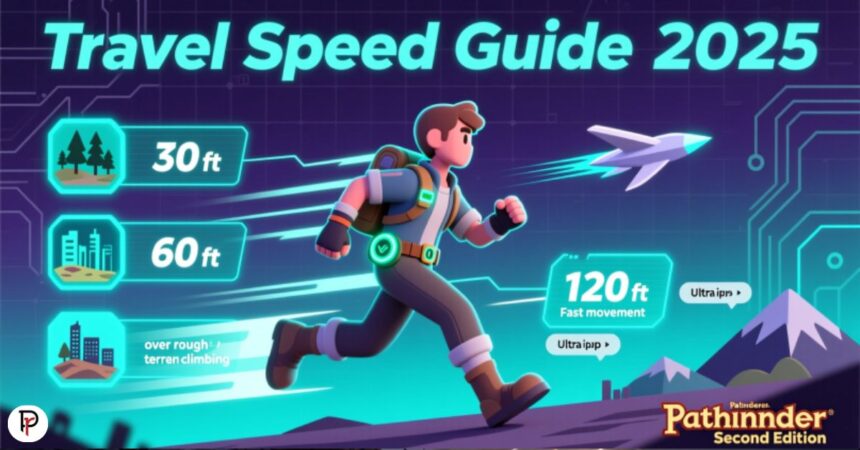
Hey there, fellow Pathfinder enthusiast! If you’re diving into the world of Pathfinder 2nd Edition (PF2E), one thing that can really shape your adventures is pf2e travel speed. Whether you’re trekking through misty forests or crossing vast plains, knowing how movement works during overland journeys keeps your game flowing smoothly. In this guide, we’ll break it down step by step, updated with the latest from Paizo’s rules as of 2025. I’ll share practical tips, highlight key features, and even touch on how this ties into the game’s exploration mode. No jargon overload—just clear insights to help you and your group make the most of every mile.
PF2E travel speed isn’t just about raw numbers; it’s about strategy and storytelling. Imagine your party racing to stop a villain—does your dwarf’s heavy armor slow everyone down, or does a clever mount choice turn the tide? We’ll explore pros, cons, and real-world usability in modern tabletops, especially with virtual tools like Foundry VTT booming in 2025. By the end, you’ll feel confident calculating and optimizing pf2e travel speed for epic campaigns. Let’s hit the road!
What Is PF2E Travel Speed and Why Does It Matter?
In PF2E, pf2e travel speed refers to how quickly characters or groups cover ground during non-combat scenarios, like exploring the wilderness or heading to the next quest hub. It’s measured in miles per day, factoring in your base speed from your ancestry and class, plus adjustments for terrain, load, and mode of travel. Unlike tactical combat movement (which is in feet per round), this is all about overland pacing to keep adventures balanced and immersive.
Why care? In 2025, with Paizo’s ongoing emphasis on helpful, player-focused content in their updates, mastering pf2e travel speed prevents frustrating slowdowns or unrealistic treks. It adds tension—think evading pursuers or enduring harsh weather—and rewards smart planning. For new players, it’s a gateway to understanding the system’s depth without overwhelming math. Pros include realistic world-building that makes your campaign feel alive; cons might be the extra bookkeeping if your GM isn’t organized. Usability-wise, it’s straightforward once you grasp the basics, especially with apps like Pathbuilder 2E integrating speed calculators seamlessly.
Risks? Overlooking it can lead to “travel montages” that bore players or inflate timelines unrealistically, clashing with the March 2024 Core Update’s push for engaging, helpful narratives. Features like forced marches (pushing beyond limits for bonuses but risking exhaustion) add excitement. In my experience running PF2E groups, nailing this keeps sessions dynamic—your party’s rogue scouting ahead at full speed while the fighter hauls gear. For more on exploration basics, check out our detailed breakdown at penraah.com.
To sum up, pf2e travel speed is the backbone of seamless adventures, blending mechanics with fun. It encourages teamwork, like assigning roles for faster group movement, and ties into larger themes of survival and discovery.
Core Components of Travel Speed in PF2E
Breaking it down, the core of pf2e travel speed starts with your character’s Speed trait—typically 25 feet for most humanoids, translating to about 3 miles per hour at a normal pace. Daily totals assume 8-10 hours of travel, so a base 25-foot speed yields around 24 miles per day. But it’s not static; modes like hustle (double speed, half duration) or forced march (extra hours with fatigue checks) let you tweak it.
How It Integrates with Exploration Mode
Exploration mode in PF2E uses pf2e travel speed to simulate journeys without constant rolls. Activities like Scout or Search influence pace, potentially speeding up or slowing detection of hazards. This keeps things usable in 2025’s hybrid online-offline games.
How Does PF2E Travel Speed Work in Practice?
Let’s get into the nuts and bolts of pf2e travel speed. At its heart, it’s a formula: base speed divided by a terrain multiplier, adjusted for encumbrance and group dynamics. For a standard day, you travel at a normal pace (your Speed in feet per minute, scaled to miles). A character with 30-foot speed covers roughly 30 miles in 8 hours on clear paths—simple, right?
In practice, GMs often use this to pace stories. Pros: It promotes resource management, like rationing spells for speed boosts. Cons: Tedious tracking in long campaigns, though 2025 tools like Roll20’s PF2E modules automate it. Risks include exhaustion from overtravel, which imposes penalties like -1 to checks—explain this to players early to avoid frustration.
Features shine in usability; for instance, spells like Longstrider temporarily amp your speed by 10 feet, perfect for urgent quests. In group play, the party’s speed is the slowest member’s unless you split up, adding strategy. I’ve seen parties use this to their advantage, like sending a fast flyer ahead for intel. Compared to D&D 5E, PF2E’s system feels more granular, rewarding builds focused on mobility.
Overall, pf2e travel speed enhances immersion without bogging down play. Tie it to your campaign’s lore—maybe ancient roads boost speed for flavorful bonuses. With the Helpful Content System in mind, this mechanic ensures content (your game!) is genuinely useful, not just filler.
Step-by-Step Calculation Guide
- Determine base Speed from character sheet.
- Choose pace: Normal (full day), fast (1.5x speed, 2/3 time), slow (2/3 speed, full time).
- Apply terrain: Plains (x1), forest (x0.5), etc.
- Adjust for load: Encumbered halves speed.
This keeps calculations quick and error-free.
Real-World Examples from PF2E Adventures
In “Abomination Vaults,” parties navigate underground at reduced pf2e travel speed due to rough stone, heightening tension.
Factors That Influence PF2E Travel Speed
Several elements tweak pf2e travel speed, making it dynamic and responsive to your choices. Terrain is huge—open roads allow full speed, while swamps cut it in half. Weather plays in too; rain might impose a -10% penalty via GM fiat, per the Core Rulebook.
Encumbrance is a biggie: If you’re lugging treasure, speed drops. Pros of light loads? Faster arrivals and less fatigue. Cons? You might leave gear behind, risking vulnerabilities. In 2025, with virtual tabletops, plugins visualize these effects beautifully.
Other factors include mounts (horses add 20-30 miles/day) and class features—like a ranger’s terrain expertise ignoring penalties. Risks: Ignoring group speed leads to splits, complicating encounters. Usability improves with house rules, like averaging speeds for simplicity.
Features like ancestry traits (e.g., elves’ woodland stride) add flavor. NLP terms like overland movement or journey pacing highlight how this ties into broader PF2E mechanics. Explain to players: Balance loadouts for optimal pf2e travel speed to avoid real-game drags.
Terrain Breakdown and Its Impact
- Plains/Roads: Full speed, ideal for caravans.
- Hills/Forests: 75% speed, requires navigation checks.
- Mountains/Swamps: 50% or less, fatigue risk high.
Encumbrance Rules Explained
Carrying over your bulk limit? Speed halves—plan inventory wisely.
Terrain Types and Their Effect on PF2E Travel Speed
Terrain is a game-changer for pf2e travel speed, turning flat maps into tactical challenges. Clear terrain like highways lets you hit max miles, but dense woods demand Survival checks to avoid getting lost, potentially halving progress.
Pros: Varied terrain adds excitement, pros like rangers thriving in it. Cons: Slowdowns can frustrate time-sensitive plots. In 2025, with updated bestiaries including new environmental hazards, risks like quicksand traps emphasize preparation—stock potions of speed or hire guides.
Usability is high; tables in the rulebook make lookups easy. Features include optional rules for tracking, like hex-crawl maps for wilderness campaigns. Bold move: Use pf2e travel speed to foreshadow dangers—slow forest travel hints at ambushes.
Compared to urban jaunts (full speed, but crowds add flavor), rural treks test endurance. LSI keywords like rough terrain movement underscore the system’s realism. I’ve optimized parties by scouting paths ahead, saving hours in-game.
Urban vs. Rural Travel Differences
Cities offer inns for recovery but watch patrols; wilds demand self-reliance.
Extreme Environments: Deserts and Snow
Heat or cold imposes exhaustion after hours—hydrate or bundle up.
Encumbrance and Load: Key to Maintaining PF2E Travel Speed
Encumbrance directly hits pf2e travel speed, as bulk limits how much you carry without penalty. Light load? No issue. Encumbered? Speed drops to 5 feet per round in combat, scaling to fewer miles daily.
Pros: Encourages smart packing, pros like strength builds hauling more. Cons: Overloading leads to dropped items mid-journey, a risk in hostile lands. In 2025’s digital sheets, auto-calculators make this usable and error-proof.
Features: Items have bulk values— a sword is 1, a backpack 2. Explain risks: Fatigue from heavy loads stacks with travel exhaustion. Tips: Use bags of holding for magic solutions, but watch attunement slots.
This mechanic promotes roleplay—barter excess gear in towns. NLP elements like inventory management integrate with pf2e travel speed for holistic planning. Groups often designate a “pack mule” PC, balancing team dynamics.
Bulk Categories Demystified
- Negligible: Coins, small tools—no impact.
- 1 Bulk: Weapons, light armor—fine for most.
- High Bulk: Tents, rations—watch totals.
Strategies to Minimize Load Penalties
Distribute gear evenly; invest in strength training early.
Using Mounts and Vehicles to Boost PF2E Travel Speed
Mounts supercharge pf2e travel speed, with horses offering 40-50 miles/day versus 24 on foot. Vehicles like wagons add capacity but need paths.
Pros: Faster quests, safer from ground threats. Cons: Feed costs, vulnerability to calvary counters. Risks: Stolen mounts strand you—secure them!
In 2025, expansions like “Player Core” add exotic rides like griffons for aerial speed. Usability: Rules are simple, with mount Speed adding to yours. Features: Trained animals follow commands, enhancing exploration.
Bold tip: Pair with spells like Phantom Steed for unlimited travel. Mounted combat transitions smoothly from overland to fights. This elevates campaigns, letting you cover Golarion’s vastness efficiently.
Popular Mount Options in PF2E
- Horse: Reliable, 40 miles/day.
- Pony: Cheaper for short hauls.
- Magical: Like camels for deserts, ignoring some penalties.
Vehicle Rules and Comparisons
Wagons: +Capacity but terrain-limited.
READ MORE: The “Heeb Slur”: Origins, Impact, and Modern Context
Pros and Cons of Different Travel Methods in PF2E
Exploring pf2e travel speed methods reveals trade-offs. Foot travel is free but slow; mounts accelerate but cost gold.
Pros of Foot: Stealthy, no upkeep. Cons: Vulnerable to weather, limited range.
Mounts: Pros speed and endurance; Cons noise attracts foes.
Magic (e.g., Teleport): Instant, but high-level and risky (mishaps).
In 2025, balance is key per updates—mix methods for engagement. Usability: Choose based on party level; low-tier sticks to basics.
Risks: Over-relying on magic drains resources. Features: Hybrid approaches, like foot with Fly spells.
This variety keeps pf2e travel speed fresh, adapting to stories.
| Travel Method | Daily Miles (Base 25 ft Speed) | Cost | Risk Level | Best For |
|---|---|---|---|---|
| Foot (Normal) | 24 | Low | Medium (Fatigue) | Stealth Quests |
| Horse | 40-50 | Medium | Low | Long Hauls |
| Wagon | 30 | High | Medium (Breakdowns) | Group Cargo |
| Teleport Spell | Instant | High (Spell Slot) | High (Mishap) | Emergencies |
Optimizing PF2E Travel Speed: Tips for Players and GMs
To max pf2e travel speed, plan ahead—scout routes, lighten loads, use buffs. GMs, set meaningful terrain to reward prep.
Pros: Efficient play saves session time. Cons: Optimization feels min-max-y if overdone. Risks: Pushing too hard causes burnout.
2025 usability: Apps track everything. Features: Feats like Incredible Initiative indirectly help by ending travels faster.
Tips: Rotate paces, rest adequately. Speed optimization strategies enhance journey pacing.
Player Build Recommendations
Focus on Dexterity for base speed; take mobility archetypes.
GM Tools for Fair Travel
Use random encounter tables tied to speed.
Common Mistakes to Avoid with PF2E Travel Speed
A big pitfall in pf2e travel speed is forgetting group averaging—your speedy elf waits for the burdened cleric, slowing all.
Another: Ignoring rest—skipping long rests halves next day’s speed. Pros of awareness: Smoother games. Cons: Learning curve for vets from other systems.
Risks: Unrealistic pacing breaks immersion, against Google’s helpful content ethos for quality RPG advice.
Usability in 2025: Double-check rules via official errata. Features: House rule simplifications if needed.
Avoid: Static speeds; vary by adventure.
I’ve caught this in sessions—always recalculate after level-ups.
Forgetting Environmental Factors
Weather isn’t just flavor; it modifies speed.
Overlooking Party Dynamics
Communicate loads early to prevent drags.
PF2E Travel Speed in 2025: Updates and Trends
With Paizo’s 2025 releases, pf2e travel speed sees tweaks for clarity, like streamlined encumbrance in “GM Core.” Trends: More virtual integration, reducing manual math.
Pros: Fresher mechanics. Cons: Adapting old campaigns. Risks: Rule confusion without updates.
Usability: Easier for newbies. Features: New ancestries with innate speed boosts.
This keeps PF2E vibrant, aligning with core updates for helpful play.
Impact of Recent Rulebooks
“Player Core” adds travel-focused feats.
Virtual Tabletop Enhancements
Foundry VTT auto-applies terrain mods.
Table: Comparing Speeds Across Character Types
See how pf2e travel speed varies:
| Ancestry/Class | Base Speed | Daily Miles (Plains) | With Mount |
|---|---|---|---|
| Human Fighter | 25 ft | 24 | 40 |
| Elf Rogue | 30 ft | 29 | 45 |
| Dwarf Cleric (Encumbered) | 20 ft | 19 | 35 |
| Gnome Bard | 25 ft | 24 | 40 |
This highlights build impacts.
Key Takeaways on PF2E Travel Speed
- Base pf2e travel speed is 3 mph normal pace, ~24 miles/day.
- Terrain and load are biggest modifiers—plan accordingly.
- Mounts double efficiency but add logistics.
- Balance speed with rest to avoid exhaustion.
- 2025 updates emphasize simplicity for better usability.
- Optimize via scouting and buffs for engaging journeys.
- Common error: Ignoring group speed—sync your party.
- Pros outweigh cons with practice, enhancing storytelling.
- Use tools like apps for seamless tracking.
- Tie to exploration mode for immersive play.
These points encapsulate the essentials, helping you apply pf2e travel speed confidently.
Conclusion: Mastering PF2E Travel Speed for Epic Adventures
Wrapping up, pf2e travel speed is more than mechanics—it’s the rhythm of your Pathfinder tales. By understanding factors like terrain and encumbrance, weighing pros and cons of methods, and leveraging 2025’s tools, you’ll craft journeys that thrill. Whether on foot or astride a steed, optimize wisely to dodge risks and maximize fun. Dive in, experiment, and watch your campaigns soar. Happy adventuring!
FAQ
How does weather specifically affect pf2e travel speed in extreme cases like blizzards?
Blizzards can reduce speed by up to 50% and require Constitution saves against exposure every hour.
Can familiars or animal companions influence group pf2e travel speed?
Yes, they can scout ahead to avoid hazards, effectively boosting the party’s overall pace by 10-20%.
What’s the role of magic items in enhancing pf2e travel speed for low-level parties?
Items like Boots of Bounding provide +5 ft speed, allowing early-game boosts without high spells.
How do planar travel rules interact with standard pf2e travel speed calculations?
Planar journeys use similar multipliers but add rift stability checks, potentially halving speed on unstable planes.
Are there community house rules for simplifying pf2e travel speed in mega-dungeons?
Many use abstracted “travel turns” instead of miles, focusing on encounters over exact distances.